

International trade has been reconfigured over the past decade. In a context of intensifying US-China competition, the contestation of international economic law, as well as the pursuit of relative gains vis-à-vis other powers, has led to the abandonment of hyper-globalization rhetoric. While the use of the economy as a weapon for geopolitical gains is not new, with first deployments dating back to mercantilist practices of the 19th century, contemporary weaponization has surged after 9/11 and the War on Terror, followed by the US sanctions on Iran in 2005 and Russia in 2014. However, it was not until the first and second Trump administrations, followed by a somewhat differentiated approach under the Biden administration, that geoeconomics became consolidated as a tool of statecraft for the world’s largest economy. The result is that, today, international trade has become inseparable from geostrategy.
Two main views have tried to define the present moment. On the one hand, some have argued this change should be attributed to the rise of populist and isolationist leaders representing the “losers of globalization”. From this perspective, were those imbalances to be corrected, that is, the inequalities and job displacements, the international system could be reshaped into a new consensus closer to the post-World War II managed globalization as opposed the neoliberal globalization of the 1980s/90s.
When viewed from the vantage point of middle powers, the current geoeconomic moment appears less a complete rupture and more a new phase of strategic adaptation.
The other suggests a mythical perspective that grounds the use of geoeconomics in the natural Hobbesian state of the world. This “return of history” is seen as the inescapable fate of an international system driven by a Thucydides trap. While the first view sees geoeconomic policymaking in trade as a temporary mistake, the second identifies its permanent and defining characteristic. Which view is closer to the truth? Is geoeconomics temporary or inescapable? When seen through the lens of middle powers, states with meaningful regional or economic influence but without the systemic power to unilaterally shape the international order, a third path may yet emerge.
Pragmatism as a Political Model
Free trade and multilateralism, long seen as markers of a geopolitically balanced and cooperative order, have increasingly been displaced by protectionist and zero-sum logics. Though often assumed to be pursuing vested interests through concomitant zero-sum strategies, middle powers do not possess that luxury; their economic and political instruments must remain context dependent. This means acting pragmatically, often seeking a continuation of the existing order, given many of its core structures remain functional and effective.
When viewed from the vantage point of middle powers, the current geoeconomic moment appears less a complete rupture and more a new phase of strategic adaptation. For instance, the United States has made use of tariffs to implement foreign policies that have markedly become more aggressive since the end of the main phase of the war on terror, straining partnerships long thought to be inviolable. Identified as its main competitor, China has begun employing calibrated strategies in places like Europe to maintain and expand its economic power. By focusing on strategic sectors in the EU such as automobiles and transportation, a new economic battleground has opened up with China at the helm.
It is evident that the system in which middle powers find themselves is not one they can navigate easily. O’Brien and Quah Say Jye have described the vulnerability of middle powers through the notion of “hegemonic predations.” These states operate within a contested system marked by fragile stability. In such a context, pragmatic and carefully calibrated action becomes essential to preserving their positions. As a Council on Foreign Relations article highlighted, however fragile the current international system may be, middle powers still benefit from its continuity.
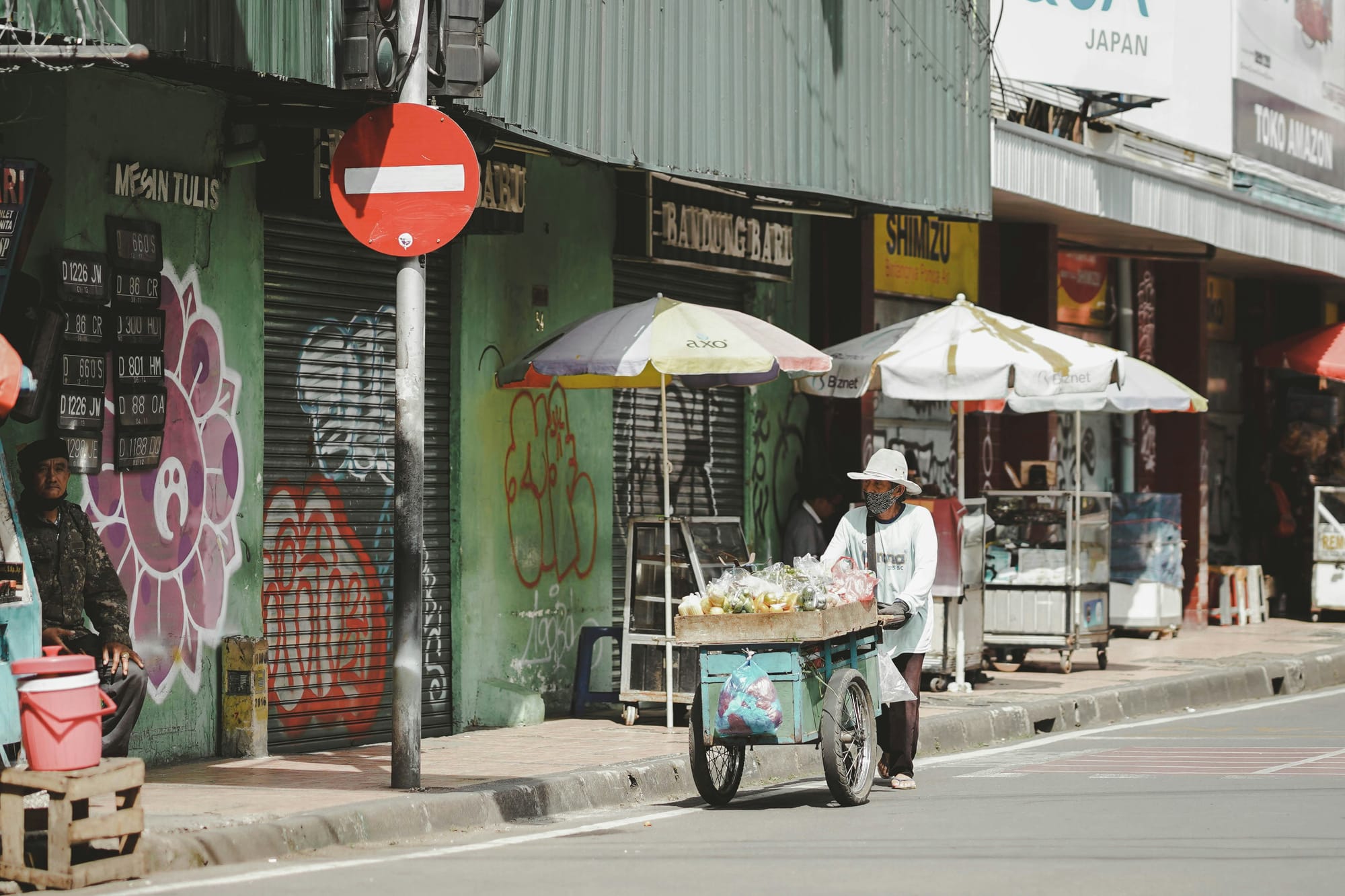
Accordingly, middle powers pursue a form of limited independence that is context dependent, through strategic collaboration. Indonesia is a useful example: a country of more than 250 million people located in the geopolitical hotspot of Southeast Asia. It is reliant on China for its goods and services and cannot separate its economic and security aspirations from the direction of the United States. It may not be in its best interest to pursue autonomy at the expense of its partnerships with both China and the United States. This means that Indonesia will have to make use of various bilateral and multilateral means of engagement to pursue its geoeconomic objectives, given its reliance on the policies of both major powers.
Some middle powers, such as India, have also deployed large-scale trade agreements to expand their room for manoeuvre. The EU–India trade deal, which involves the reduction of significant tariff barriers is expected to create new opportunities for strategic sectors for both parties. It aims to boost the agriculture industry in India.
Therefore, for middle powers, the shifting geoeconomic landscape offers little clarity and even fewer stable anchors. Navigating between competing pressures requires constant adjustment, often without the capacity to shape outcomes decisively. Yet, through pragmatic cooperation and strategic flexibility, middle powers can still carve out space to sustain stability and influence in an evolving order.


